With Projectmates schedule tool, building task-based timelines for projects is easy. Group tasks, set predecessors, assign responsibilities, set reminders, and more. Everyone on your team will be able to access the project schedule(s) from anywhere on any device, making it easy when you’re in the office or on-the-go.
A project’s schedule(s) can be accessed by navigating to the project through the My Projects page.
Once inside of a project, the schedule tool can be found on the left-side menu by clicking Tasks > Schedules. From there, select the appropriate schedule type.
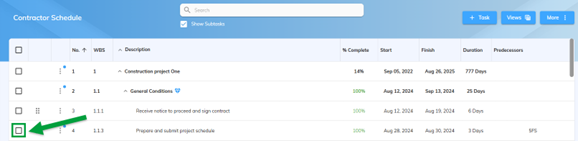
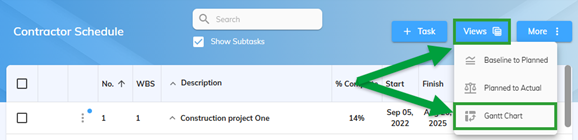
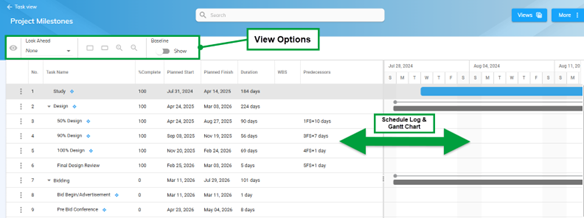
Tasks will be ordered chronologically, with the task’s Description, % Complete, Start & Finish dates, Duration, and Predecessor relationships noted.
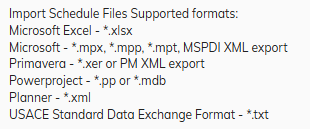
Projectmates allows users to import schedules formatted through our Excel template, or from an external system – such as Primavera (.xer) or Microsoft Projects (.mpp).
Within a schedule, selected from the left side bar menu: Click More in the top right-hand corner, and select Import/Export.
From the schedule import/export menu: Click Select to open your computer’s file browser and locate your external schedule system file; or drag and drop the file into this screen.
Export the current schedule tasks into Projectmates template format.
Or download the blank Projectmates format template.
a) Open the blank template in Excel.
b) The template allows you to fill in all necessary fields, with a sample task row provided.
The columns marked in blue denote a required field, crucial for successful importing back into your Projectmates schedule.
4. Select the checkbox to confirm acknowledgment that “All existing items will be deleted on upload”. This ensures that a schedule isn’t duplicated by accident and will overwrite anything that previously existed.
In the “Create new task” window, enter a Task Name.
Enter the Planned Start and Planned Finish dates.
If applicable, enter the Actual Start and/or Actual Finish dates.
Milestone tasks can be designated with the toggle option.
Click Save once complete.
7. New tasks will automatically appear at the end of the schedule. To move a task to a new spot in the schedule, click the 6 dots on the left-hand side to drag and drop the task to a new location.
Predecessor relationships can be set between tasks, allowing automated changes to tasks as the schedule is manipulated and actioned.
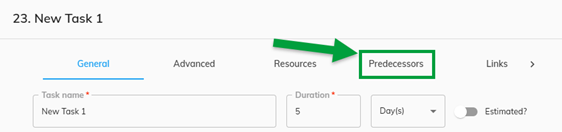
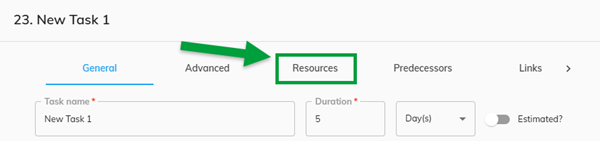
Select a task to edit, and click the Predecessors tab.
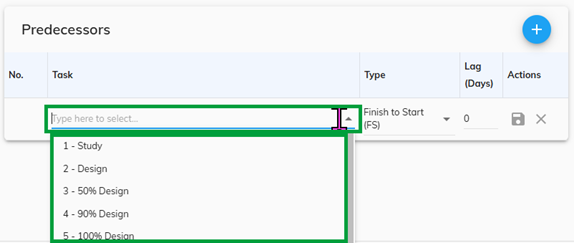
2. Click the + button.
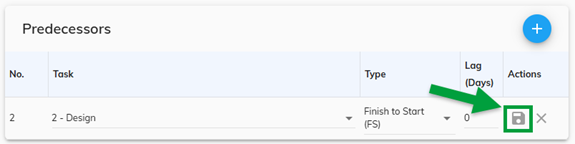
3. Select a task from the dropdown that this task will be dependent on.
4. The dependency Type options are: 1. Finish-Start (Task A finishes = Task B starts) 2. Finish-Finish (Task A finishes = Task B finishes) 3. Start-Finish (Task A starts = Task B finishes) 4. Start-Start (Task A starts = Task B starts)
5. In the Lag (Days) field, denote any positive or negative lags days between the dependent task and the current task.